The Incredible Honeymoon

The Incredible Honeymoon

E. Nesbit

Children's / Classics / Poetry

TO understand this story you will have to believe in the Greater Gods—Love and Youth, for example, and Adventure and Coincidence; also in the trusting heart of woman and the deceitful spirit of man. You will have to reconcile yourself to the fact that though daily you go to London by the nine-seven, returning by the five-fifteen, and have your accustomed meals at eight, one, and half-past six, there are those who take neither trains nor meals regularly. That, while nothing on earth ever happens to you, there really are on earth people to whom things do happen. Nor is the possibility of such happenings wholly a matter of the independent income—the income for which you do not work. It is a matter of the individual soul. I knew a man whose parents had placed him in that paralyzing sort of situation which is symbolized by the regular trains and the regular meals.
Read online
  • 439
Là-bas

Là-bas

J.-K. Huysmans

Fiction / Classics / Cultural

Les Soirées de Médan est un recueil collectif de six nouvelles, publié le 15 avril 1880, réunissant Émile Zola, Guy de Maupassant, J. K. (Joris-Karl) Huysmans, Henry Céard, Léon Hennique et Paul Alexis. l\'idée et le nom même du recueil auraient germé au cours d\'un repas hivernal dans l\'appartement parisien de Zola, ce jour-là entouré de Hennique, Guy de Maupassant, Huysmans, Céard et Alexis, lorsqu\'a Émile Zola, après l\'évocation de divers souvenirs respectifs des six amis relatifs à la guerre de 1870
Read online
  • 432
Antigonick

Antigonick

Anne Carson

Poetry / Classics / Contemporary

Antigonick is a translation of Sophokle's Antigone only in the loosest sense – with significant changes and metatextual additions to the original, an extra character, and illustrations with interpretations left open to the reader, it could easily be considered a different work altogether. With text blocks hand-inked on the page by Anne Carson and her collaborator Robert Currie, Antigonick features translucent vellum pages with stunning drawings by Bianca Stone that overlay the text. Anne Carson has published translations of the ancient Greek poets Sappho, Simonides, Aiskhylos, Sophokles and Euripides. Antigonick is her first attempt at making translation into a combined visual and textual experience: it will provoke poetry readers, classical scholars, theatre people and comic-book aficionados.
Read online
  • 427
Anthony Trent, Master Criminal

Anthony Trent, Master Criminal

Wyndham Martyn

Mystery / Classics

This is a reproduction of a book published before 1923. This book may have occasional imperfections such as missing or blurred pages, poor pictures, errant marks, etc. that were either part of the original artifact, or were introduced by the scanning process. We believe this work is culturally important, and despite the imperfections, have elected to bring it back into print as part of our continuing commitment to the preservation of printed works worldwide. We appreciate your understanding of the imperfections in the preservation process, and hope you enjoy this valuable book. ++++ The below data was compiled from various identification fields in the bibliographic record of this title. This data is provided as an additional tool in helping to ensure edition identification: ++++ <title> Anthony Trent, Master Criminal<author> Wyndham Martyn<contributor> null<publisher> Moffat, Yard & Company, 1918<subjects> Criminals
Read online
  • 419
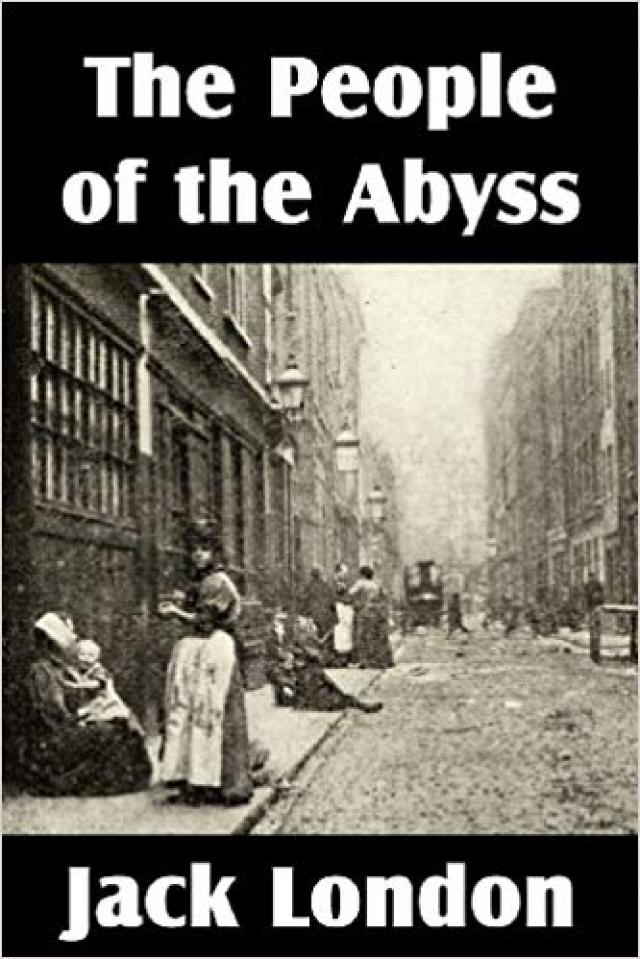
The People of the Abyss

The People of the Abyss

Jack London

Literature & Fiction / Adventure / Classics

From the author's preface: "The experiences related in this volume fell to me in the summer of 1902. I went down into the underworld of London with an attitude of mind which I may best liken to that of the explorer. I was open to be convinced by the evidence of my eyes, rather than by the teachings of those who had not seen, or by the words of those who had seen and gone before. Further, I took with me certain simple criteria with which to measure the life of the underworld. That which made for more life, for physical and spiritual health, was good; that which made for less life, which hurt, and dwarfed, and distorted life, was bad."
Read online
  • 418
Agua Viva

Agua Viva

Clarice Lispector

Fiction & Literature / Experimental / Classics

This rarefied novel adopts the form of the interior monologue characteristic of Lispector's (1925-1977) oeuvre. A woman sits by the open window of her Brazilian beachfront studio, writing a long letter to someone no more specific than "you." She parries with language (which is "only words which live off sound") and is wholly consumed with problems of epistemology: "I want to die with life." A painter, she struggles as well to recreate the world around her: "On certain nights, instead of black, the sky seems to be an intense indigo blue, a color I've painted on glass." When she listens to music, she says, "I rest my hand lightly on the turntable and my hand vibrates, spreading waves through my whole body." While the narrator's self-consciousness ("And if I say 'I,' it's because I don't dare say 'you,' or 'we,' or 'a person.' I'm limited to the humble act of self-personalization through reducing myself, but I am the 'you-are.' ") and diction ("the ultimate substratum in the domain of reality") may strike some readers as academic, others will appreciate the challenges of Lispector's philosophical investigations. Copyright 1989 Reed Business Information, Inc.
Read online
  • 418
183