

Orkney, p.1
Orkney, page 1
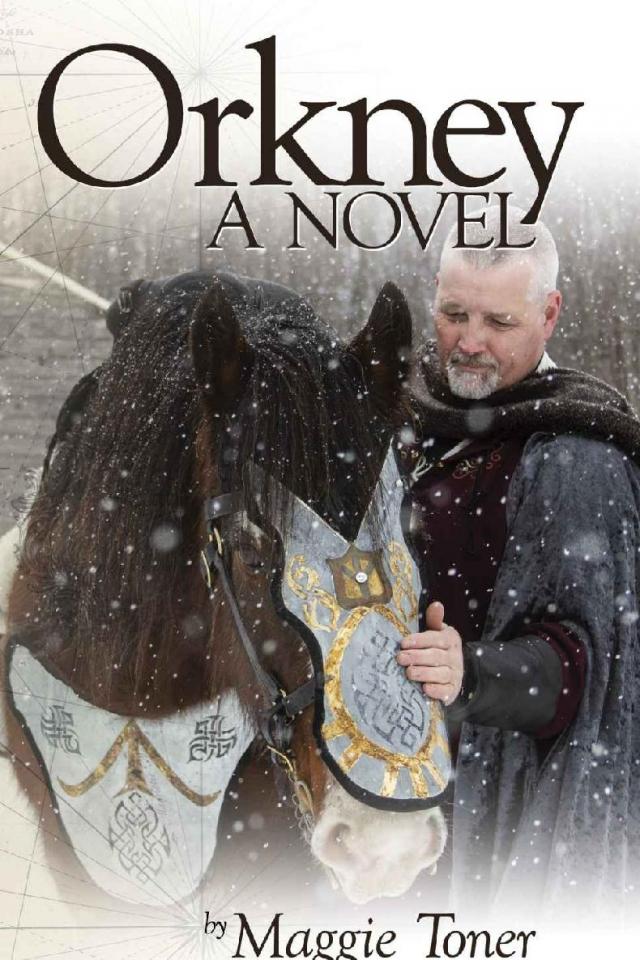


The novel you are holding in your hands is self-published by the author. In the current publishing climate, traditional publishers do not publish a first novel by an untested author, and rather let the market decide if the author is worth an investment. Self-publishing includes mountains of work advertising and promoting the book. This costs many thousands of dollars, even if the book is extremely good. You can help. When you are done reading, please review the book. Whether on Amazon or on Goodreads.com or on another platform, any review, good or bad, draws attention to the book. Thanks for obtaining the novel, thanks for reading, and thanks in advance for reviewing.
Copyright Margaret Toner 2022
Self-Published through Amazon Kindle.
Second Edition
Cover Photo Credit: Wendy Cotie, Big Picture Studios, Arnprior, Ontario, Canada.
To Fly Without Wings
I remember watching him in the sunlight. He was teaching me how to make fishing line from a horse’s tail hair. I can see him now, tying the hook onto the line. His nails were bitten short to the quick, but the hands that wore them were strong and tanned. When our father died, he took over the man’s job of he seemed so wise to me: always patient, always tolerant of my questions and my mistakes. Where our own father would have been firm, because my brother was young, and because of his character, he always used logic and reason and sympathy.
I remember romping in the woods together. I remember helping in the fields as he drove the cart full of hay. I have no memory of that life where he was not present.
I was the youngest in a family of sons. My three brothers learned to farm, learned to shoot a bow with a string of horse hair. I helped find the small brush growth to make the arrows. Not too small or they would break when stretched against the string. Not too heavy, or they would not fly true or far. I collected the feathers of wild birds as they dropped in the forest. My brothers did not trust me to make the flint tips, thinking my hands too small and lacking the strength to grind them sharp. But everyone had a role, mine as important as the rest.
After our father’s death, our mother had to represent the family in the village. Our mother was wise, clever and unintimidated by the men who made decisions for all of us. But she was smart enough to take her two older sons with her, in case any of the elders wished to dismiss her opinions because she was a woman.
The eldest was calm, but opinionated and sometimes unable to see through the eyes of others. He wore his brown hair back with a thong, his face clean shaven. On feast days, small braids on either side of his face would frame it, adding to his already good looks. He would form opinions without all of the facts. But he honestly wished for the best outcome, and his counsel was valued. He was already a man, with children of his own. Not old enough to be an elder of the village, but old enough that his word was respected. He also had a reputation for honesty and for sincerely trying to do the fair thing. He was the sort of man that other men wanted to count among their friends.
The second eldest was the opposite of the first. With his dark hair and pale skin, he would colour to anger and look like his flesh would fly off his bones if he held the anger in any longer. His choice of clothing made from textiles coloured with raspberries or strawberries heightened this effect. He was loyal to a fault, even when the subject of his loyalty wronged him. He chose a wife who did not respect him, and he was cruel to her in return. Neither of them was happy. The only moment when he seemed to find peace was when shooting his bow. He would go silent, all the anger would rush away from him, his only thought on the deer in the forest soon to meet doom by his hand. His dark hair and beard gave him a striking look, drew him many admiring glances, although I know for a fact that his sense of loyalty prevented him from turning his attentions away from his family. He could be funny, and loved games and competition of all sorts.
But my nearest brother ,the one I mentioned first, the one whose name I cannot remember, even though I strain for it, struggle to reach back in time, he was the man I wanted to be. As well as raising me, he learned the trade of the wheel from one of the elders. He knew how to create a wheel for a cart that was perfectly round, so the cart bumped less as it turned. He helped build the big carts that we used to bring in hay for the horses, and wheat and other foods for ourselves. He knew how to fix a cart with a wheel that would not turn. And he made the absolute best libations in all the surrounding villages, having learned from our father. When his brew was consumed at celebrations, men and women alike set themselves free and the result was always a bumper crop of babies nine turns of the moon later. My brother understood that sometimes the village needs release from the drudgery of living, the sorrows and regrets of choices. Even the happy need a change from ordinary life once in a while to appreciate the goodness they enjoy. My brother was always thinking about how to contribute to the lives of others. He once said to me that if he could do one truly good thing each day, then our village, and maybe other villages, would be better by the time came for him to join our Father where he waited for us.
He would stand with his back against a tree, with his right knee bent and his right foot braced against the bark, both hands behind the small of his back. Other times he would stand with his side toward a tree or a building, his elbow against a protruding branch. It was almost as if, when he really wanted to pay attention, to take absorb everything a speaker was saying, then he surrendered the business of keeping his body upright to his elbow or his hands or his foot. I knew when he did this that I should pay attention to the conversation.
The weather in our land was ideal for crops. The rainy season went from the beginning of winter to its end, and the world was mud, mud, mud. I hated the mud, and the chilblains from the cold rain. I felt the cold seep into my spine during the winter. Even in summer, it would rain for a time each day. But then the clouds would clear and a healing breeze would dry out the fields so they did not rot.
As children, we spent summer afternoons escaping our chores and running in the woods, observing the creatures there, and discovering ourselves. I once ran off to the forest with a girl from the village. She taunted me, teased me, encouraged me, and then removed my clothes. She touched my whole body, as if it were a magic thing, even my club foot, the foot that prevented me from ever becoming a warrior. When she finally removed her shift and stood naked before me, I could think of nothing else but touching her, kissing her, knowing her body. In family groupings, we all knew the nakedness of the opposite sex. But that was different. The stretched breasts and scarred belly of my mother had nothing to compare with this smooth, soft, magical skin. Once it was over, I was deliriously happy, but I never had any illusion that I would be her choice. A healthy, beautiful young girl would be expected to choose a husband perceived to be as strong and healthy as herself, to ensure the health and survival of their babies. But I walked away with a treasure, one I was surprised to own.
Once I was old enough, it was my choice, and my role, to care for the horses. Our horses were mostly used in our fields, completing the tasks we ourselves were not strong enough for. Ploughing, seeding, harrowing the rows of plants, and carrying away the ripe produce in carts to be stored for winter. I am not sure how I learned to care for them. At least some of it was instinct. But I learned how to care for overstrained muscles, how to trim sore work weary hooves. I knew how to use grain poultices to relieve the sores that grew deep in the foot. I could calm and tend to the needs of the angriest or most frightened horse. I rubbed plants on them to keep the bugs away. I pulled knots from their manes and tails and plaited them when the days were too hot. I knew the difference between a horse dying of pain in the belly and a horse that merely had discomfort that would pass. I knew which horses needed grain to bolster their strength and those for which it would prove too strong and heady for them to maintain a manageable temperament. And my favourite thing, my moment of greatest happiness, was to take the buckskin mare down the path toward the next village and to turn her head to home and let her run as fast as she dared. This, I thought, must be what the bird feels, what the arrow feels.
I knew, as only few horsemen do, that if I was calm and silent both inside and out, if I focused, like my dark haired brother with his bow, I could hear the horses talking. I could hear my mare’s thoughts as she moved out of the way of the dominant mare approaching to receive a piece of turnip. There was no resentment, no rancour. I knew when a pain in the foot was brewing but not yet causing a limp. I knew when the stud colt’s testicle did not drop that he was in terrible pain. I knew that he understood what was happening, and that he begged for death. It was all I could do not to give in to my own despair when I cut his throat. Instead I concentrated on sending him compassion, calm, and reassurance. He went quietly, before our meat man came to get him. I never troubled with the idea of eating the horses I despatched. The soul inside was gone. It wasn’t like people, where we died and then waited for the burial rites in order to proceed to the next life. Our bodies had to remain and rot in the ground to give back to the earth what we had taken from her in our lives. The horse meat gave strength and health to our village. The other horses always understood what I was doing, and they never suggested to me that they felt it wrong. They had a wise and beautiful understanding of life.
From my first man hair until I was of marriageable age, our village gradually changed. We had seasons where the summer was too wet, and the winter cold enough for snow. We hung animal pelts in the doorways of our homes sometimes five or six layers thick. The homes were buried in the ground to the turf roof, but now needed more turf to stay warm and keep out the rain.[1] We burned fires much higher, used more wood, ate less, and slept less well. It was a gradual, creeping process, not so bad at first. We could have called each year simply aberrant. That’s all right, next season will be better. In a couple of years, at the beginning, next season was better. But then, next season became only no worse. And we became worse.
We began to hear from other villages, our allies, who experienced more than we did with poor crops and bad weather, and people were suffering. They were thin, they could not fight off disease, and they were losing their teeth. They were starving. In the worst village closest to the coast, the grey ocean now seemed colder, greyer than ever. The storms brought more mountains of water than before, and all the inhabitants could do was hide in their flooded houses until it was over. Fishing was no longer a viable option due to weather and rough seas, and a valuable source of protein was lost. The woods along the shore were beginning to thin, and the game animals had moved inland in search of better vegetation.
At first we sent what little food we could spare. But as hunters from other villages began to hunt in our part of the forest, as foragers took the vegetation that supported the smaller wildlife there, the berries were picked over, and the leaves for the reviving tea we brewed were over-picked, there became less food not only for other villages, but also for us.
One night I came in from tending the horses to find my mother and my brothers in a heated discussion. My mother was old now, and she reclined on a bed covered with skins. Her body could no longer withstand the cold. My eldest brother, the one with the brown hair, was speaking. He was talking about the meeting of the elders from all the surrounding villages just held. His face was rigid with strain. He said “I do not want these people to starve, and I would help them if I could. But I have begged the elders not to sacrifice our own village to do it”. My hot-headed brother began, “we cannot allow them to steal our game, our food! We must stop them at all costs!” In the firelight his dark hair and beard contrasting his fair skin made him look like a god. “Look at our mother here. Do they want us to let her die?” My mother, ever calm and sensible, replied, “It is my time. It is nature’s way for the old to die out when food is scarce. It makes room for the younger generations.” Her voice was so low we all strained to hear. My next older brother, the blonde one closest to me, asked quietly “is that what you want Mother?” He looked at her directly, waiting for her to voice her wishes. But again the hot-head spoke’ “of course she doesn’t! “ My calm brother repeated, his golden hair shining in the light of the fire, “Brother I hear your own wishes in the way you speak, but I think the choice is our mother’s if choice it is. I do not wish her gone either, any more than I wish any of you gone. I just don’t know how we will resolve this situation. My heart is broken that this has all come to pass. And truthfully, it is our Mother’s choice and none other when she leaves this earth. We leave when we cease to fight to remain.” All this time he held our mother’s hand and tucked her skins in around her. I said nothing, having no standing as the youngest brother. I held my arms around my chest, wishing my buckskin mare could fly me away to another place.
My eldest brother sighed, and it was agreed that no more should be said that night, that we would see our way clearer in the morning. My gentle brother and I slept on either side of our mother to keep her warm. She had never snored, but just after the moon had gone down, she made a noise with her breathing, as if her very throat was collapsing. I had heard this sound before, just before my grandsire died. We woke our brothers and we all sat vigil with her, until her passage to the next life was ready and she chose to tread it.
I was filled with despair. My mother’s wisdom and will had encouraged my brown haired eldest brother’s most charitable, most reasonable self. Her will had silenced my dark haired second brother’s anger and helped him find the calm place he found with the bow. He so wanted what was right, and she helped him find the path to seek it. And my third brother, the one I loved, had drawn strength from her, and courage to be his very best and most perceptive self. She had brought out the best in all of us. Who would we be without her?
The elders arrived at our house as my sisters in law were washing and preparing her for burial. Their wrinkled faces were grave. All four of us, my brothers and I, sat to listen, and my sisters in law continued what they were doing. They did not miss a word.
The elders wanted us to burn my mother. It was not our way. Burial with a few of her possessions ensured that she was ready for the next life, and gave back to the earth. If we burned her, she would be unable to pass beyond the veil where she now waited. She would never make it to the next life. She would never see our father again. We were horrified. There were angry words. The elders accepted this; they knew it was a horrifying request. We were absolutely united in our refusal. Until.
The healer, one of the most senior of the elders, spoke. “Reports have come back to us about events in some of the other villages. It seems holes in the ground have been dug where once loved ones lay. This seems to happen within one or two days of the body being laid in the ground.”
He paused to let his words sink in. I felt like my entire body had gone numb and my chest hurt. I felt a trickling sensation from the top of my head to my feet. This must be how old men felt when they clutched their chests just before dying. But I was not dying. This was not a heart ending. This was a heart breaking. We were all silent, even my angry brother. I reached and held my gentle brother’s hand. He was shaking.
It seemed like forever before anyone spoke. My eldest brother, motioning to myself and my gentle brother, said “We will do as the elders ask. For Mother to become food for starving men would be an affront to the natural way of things. We will say extra prayers to guide our mother to the afterlife. We will ask that the earth accept her ashes as the return of the energy she has taken. You two youngest will build a wooden frame on which to lay her. We can light a fire underneath”.
It was odd to me that my eldest brother tasked me with helping to build the pyre. I should have prepared the cart to carry her and I should have walked with the horse providing comfort to the frightened animal. But one look at my other brother, the calm one, and I could see he desperately needed comfort himself. He was pale and his hands shook. He was taut as a bowstring. I had to agree with our eldest brother’s choice.
My brother and I went to a clearing that we knew our mother loved, where she once picked berries and flowers, and we collected wood from the forest. There was some dead wood despite the increased burning over the last few winters. We cut a small tree to have enough for our task. We lashed the wood together with vines and made a frame that would hold her body off the ground. Then we laid the makings of a large fire underneath. We dressed it with animal fat so it would burn hot and high. We laid extra wood to one side. We watched the sky for rain, but although it was overcast, no drops fell.
All the while my brother and I had not spoken. We sat down together to wait for the others to bring her out. I sat close beside him, put my hands through his arm, as would a girl who was sweet on him. But I wasn’t being sweet. He was my anchor, and he was what kept the whole world from blowing away. I had never seen him cry. He was always strong and comforting to me. But now I saw the tears roll down his face fast and thick, as if he were trying to drown himself. I leaned on him, held his hand, and cried my own silent tears.
After a while we looked up. My eldest brother had roped my buckskin mare to a cart, and my mother’s body had been placed on it. I regretted, bitterly, that I had not been the one to ask my mare to perform this task. I should have been there for her. Our family and the others of our village were escorting her to the fire. They all looked stricken, knowing what we were about to do. My beautiful mare sensed their heartbreak, and she walked quietly, head down. I could feel the sadness she wore like a heavy burden. She was wishing she could ease the hurt around her. So she did what she knew how to do.
My brothers and I laid our mother on the frame that we had built. My eldest brother drew the flame to the animal fat we had placed in the fire, and the leaves and dried plants we put there caught and the fire leapt to life. The villagers sang the songs that would normally accompany a burial, but my brothers stood silent as the tears ran down their faces.






