

Control, p.1
Control, page 1
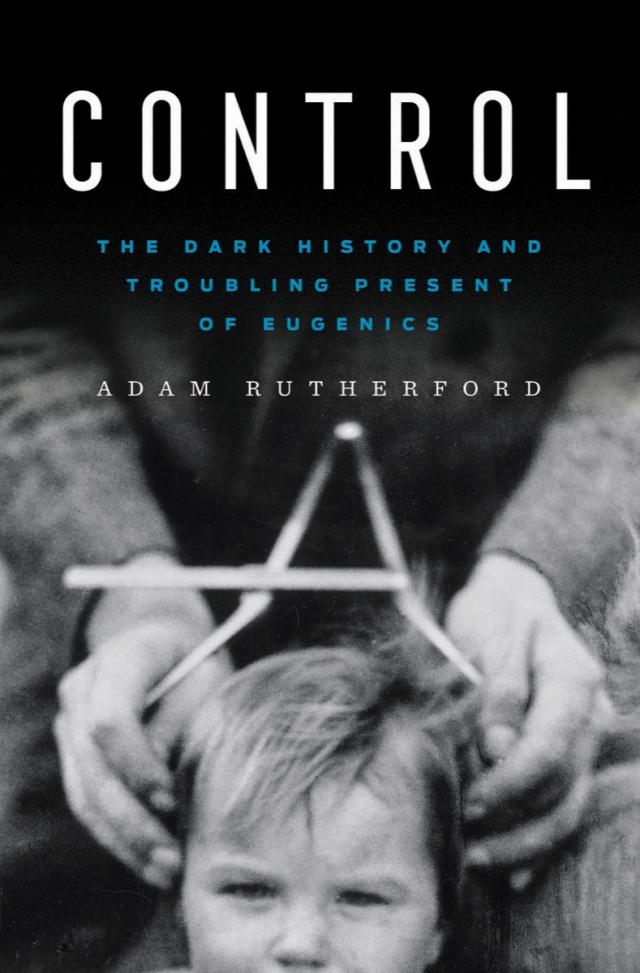


CONTROL
THE DARK HISTORY AND TROUBLING
PRESENT OF EUGENICS
ADAM RUTHERFORD
W.W. NORTON & COMPANY
Independent Publishers Since 1923
Dedicated to my friend Marcus Harben (March 5, 1974–February 11, 2021)
and his beautiful legacies, Jazmin and Joseph, whose existence makes this a world worth fighting for
CONTENTS
A Note on Terminology
INTRODUCTION
PART ONE: QUALITY CONTROL
PART TWO: SAME AS IT EVER WAS
Acknowledgments
References
Index
A NOTE ON TERMINOLOGY
This is a book about the history of a political ideology, and its repercussions in our time. The foundations of the idea lie in our eternal interest in heredity, which today is governed by the science of human genetics. This is a relatively new field, one currently enjoying a golden age as we continue to make headway in understanding the underlying biology of people. It comes with plenty of jargon and terminology. Some terms you will be familiar with, but for our purposes require definition. Alongside the history, I will be talking about genes, genomes, chromosomes, DNA and proteins, and though knowing how these work is the basis of high-school biology, people like me spend a lifetime discovering that ours is a science of exceptions, and the rules of biology are always stretched, and sometimes broken.
Scientists, argumentative as we often are, frequently fail to settle on definitions that satisfy one and all. President Harry Truman is supposed to have said, “Give me a one-handed economist!” so that his adviser could not offer an opinion and follow it up with “on the other hand. . . .” The same plea could be leveled at my ilk. Nevertheless, here goes: DNA is the name for the molecule that carries genetic information, and typically is depicted in the iconic double helix. Genes are pieces of DNA that code for proteins. Proteins are the workforce of living things: all life is built of or by proteins. Genes are part of chromosomes, which are long stretches of DNA harboring many, sometimes thousands, of genes. Chromosomes are also built from lots of DNA that control the regulation of genes, that is, switches that say when and where they need to be active. All organisms have a set number of chromosomes, and in humans that number is typically forty-six—twenty-three of these come from each parent, and twenty-two of these are paired, containing different versions of the same genes. The remaining chromosomes are the X and Y: women typically have two X chromosomes, men have an X and a Y. The genome is the total amount of DNA in an individual, or species, which includes all the genes, all the control switches, and more, much of which we don’t really yet understand. The genotype is the particular versions of genes an individual has; the phenotype is how it manifests in the physical body.
These are the basics of human biology, and I shall try to limit the technical language. However, eugenics was a political ideology that was shackled to genetics, and in some cases there is no way round grasping that nettle.
And while these basics are taught as high-school biology, there are infinite levels of qualification, exceptions, caveats and finicky details that are far from trivial. This is why human genetics is not finished, nor will it ever be, and why those who confidently assert truths in science are often buoyed by ignorance rather than knowledge.
CONTROL
INTRODUCTION
If you have children, or are ever planning to, you will surely want them to live well. You hope that they are free from disease, and that they fulfill their potential—in school, in physical fitness, in their allotted share of happiness—and that they will not suffer pain. What are you willing to do to ensure this?
On November 28, 2018, I awoke to find my phone battered with thirty-three new text and voice messages. It was mercifully only the second time this had happened, the first being when my telephone and email had been published on an American White supremacist website, with the unsolicited invitation to “contact him.” This happens when you write about race.
This time was different though and, perversely, more troubling. The messages were all requests from a harried media, asking for my comments on something that had happened in Hong Kong while I was sleeping. At a medical conference, a scientist had announced the birth of twin baby girls that he had genetically modified as embryos and reimplanted into their mother. As far as we know, Lulu and Nana (their given pseudonyms) were the first gene-edited humans ever born.
My colleagues and I in the scientific and media worlds struggled to get our heads round just what had happened. Where were these babies, and were they healthy? How had this scientist bypassed the international laws and agreements that expressly forbid such practices? There was a scramble to verify the scant information that the researcher himself had released to the public, via a presentation at the conference and a couple of slick YouTube videos. Professor He Jiankui, a biophysicist from the Southern University of Science and Technology in Shenzhen, had attempted—and by his own data, failed—to introduce a naturally occurring genetic mutation into two fertilized human embryos. His intention was to grant immunity to HIV infection to the children who would grow from those clumps of cells. The technique he had used is called CRISPR-Cas9, a gene editing tool that over the ten years since its invention has radically changed our ability to control the source code of biology. The father of the girls has AIDS, Professor He revealed, and the proposed genetic rewrites would theoretically protect the man’s children from the risk of HIV infection for life. A third child—we now know she is called Amy—was also confirmed to have been born, though further details are even more opaque.
He Jiankui was widely and immediately condemned for this human experimentation. It was experimentation, not therapy or medical treatment or intervention. He wasn’t trying to cure a disease or treat a condition. Each of the girls’ genomes was indeed modified in this procedure, but neither change resulted in the genetic variant that naturally bestows the bearer with HIV immunity. The proposed edits had failed, and he had effectively conducted a genetic experiment on those children, whose fate and health is still not publicly known.
A frenzied press called him a “mad genius” and “China’s Frankenstein.” The term “genius” is inappropriate here; the attraction of the CRISPR-Cas9 tool is that it is designed to be easy to use—a genetic edit in a lab animal that might have taken years to achieve two decades ago can now be done in a few days by a student, with much greater control. The embryos were examined, sampled, selected and reimplanted with techniques used in reproductive clinics and genetic diagnosis labs thousands of times a day all around the world. He had merely combined two fairly standard techniques in genetics and reproductive medicine to do something that is morally and ethically reprehensible, and indeed criminal.
As for “China’s Frankenstein,” knowledgeable readers like to point out that Mary Shelley’s Frankenstein was the scientist and not his unnamed creation. But wise ones know that Dr. Frankenstein was the monster. The ethics of experiments on humans are well established, and necessarily constrained. Experimentation of this sort is broadly prohibited under various conventions, including the Nuremberg Code and the Declaration of Helsinki. The story of what happened next is shrouded in mystery, but we know that a year later He Jiankui was sentenced to just three years in jail and a fine of three million yuan (around $470,000). He was released in March 2022.
The legal, ethical, moral and scientific issues thrown into relief by the birth of Lulu and Nana are enormously important, and later in the book I will examine this tragic and wicked story in detail. The principles in play are not new, but the technology employed by He Jiankui to put them into practice is. Questions about modifying life, and human life specifically, are at least as old as Frankenstein— Mary Shelley’s novel was inspired by the then new sciences of physiology and galvanism. Throughout the twentieth century, fictions and fears grew alongside the field of genetics as it blossomed and revealed the underlying software in which life is written. In the postwar era, technological advances such as the contraceptive pill helped charge a social revolution where sex could be decoupled from conception, and women could claw back some measure of reproductive autonomy. The invention of in vitro fertilization in the 1970s has resulted in the birth of several million people who previously could never have existed.
Science continually tinkers at the edges of the known, unpicking the fabric of reality, sometimes with a specific purpose in mind, more often fueled by slakeless curiosity. We invent tools to help people and answer questions about the universe, and everything in it. But science does not operate in a vacuum, and its purpose is ultimately in the service of humankind.
We are technological creatures, and we have been continuously crafting and designing nature to serve our needs and desires since long before our species emerged on the landmass that we now call Africa. Genetics is a new science, a century old at most, and really just a few decades old in any meaningful sense. The fusion of genetics with evolution is similarly only a twentieth-century field of research, as we came to understand genes as the mechanism by which evolutionary change occurs. But crudely, genetics and evolution are only the study of sex and families, which have been the primary fixations of humans since before the origin of our species. People like me examine sex lives and families at a resolution that removes every drop of joy inherent in both: at a molecular level, across populations and over oceans of time. In doing so we have made great leaps forward in understanding how human heredity works.
However, all science is political. This is a statement that causes vexation among some who confuse the ideals of science with its reality. We aim for an objective description of the world, and try to minimize the grubby political, personal and psychological biases that hinder our view of reality. But in all science—and especially the scientific study of humans—we inherit knowledge infected by the contingencies and political obsessions of our scientific forebears, whether we know it, deny it or acknowledge it. Sometimes the biological and the political are deeply intertwined. For example, in the Neolithic, we sought to control livestock and plants in order to ensure a regular supply of food, thus inventing agriculture and farming, and with that trade and commerce, and the foundations of civilization. In doing so, some pastoralist societies inadvertently selected a genetically encoded ability to digest milk after weaning, which gave them a rich source of food that had been unavailable to their lactose-intolerant ancestors. Some seven thousand years later, this dairy schism became a key distinction between the Hutu and the Tutsi, imposed by German and Belgian colonists seeking to sow racial disharmony. Indeed, some White supremacists today mistakenly think this evolutionary adaptation to dairy farming is a mark of European purity, ignorant of the fact that it also arose in Kazakh, Ethiopian, Khoisan and Middle Eastern pastoralists who also evolved alongside the mammals they milked.
Biology is political in a recent historical sense too, tethered as it is to the seventeenth-century invention of race as a means of human classification and—the subject of this book—the scientific attempts to control human biology and, with it, society. Our fundamental biology is not isolated from the architecture of our societies, nor has it ever been. We are bound by the trappings of our fleshy hardware, and evolved to push against them. This is the human condition. Humans are a paradox of nature, freed from the shackles of natural selection by our big brains and big societies, but still wedded to the mechanics of sex, inheritance and genetics.
In principle, we are free to choose with whom we mate, and our biological imperative to do so is diminished and controlled, at least compared with all other animals. We can decide whether to have children or not, how many, and how we raise them. We have options on deciding whether to proceed with a particular pregnancy when there is a known risk of disease or suffering in that future child, at least in many parts of the world. In the age of gene editing, we can even tinker with their DNA.
This is a book about two forces that shape us: control and freedom. These are such potent ideas that they serve as tectonic plates on which civilizations are built, but biology is frequently missing from our discussions about our lives and those of our children. It cannot be ignored. Life and liberty are two-thirds of the unalienable rights decreed in one of the greatest manifestos ever written—the United States Declaration of Independence. The hallowed principles in its preamble are so fundamental that they are described as self-evident truths—people are created equal, as authorized by a God, and life, liberty and the pursuit of happiness are enshrined as natural law. They are therefore incontestable, and the inarguable basis of governance.
They are of course fictions, noble lies. Set aside the fact that the men who wrote these words owned other humans as possessions, to be sold and to live their lives enslaved, much of which was justified by a newly invented science of biological classification. Slavery is a red stain in humankind’s ledger and its legacies persist: many people around the world remain enslaved today. Nevertheless, the ideas spelled out in the Declaration of Independence are beacons of light, fundamental entitlements afforded to humankind. They are also ideals that we have never achieved.
People are not born equal. They are conceived already cuffed to forces beyond their control that will shape their lives, limit their opportunities and keep their ability to fulfill those unalienable rights beyond their grasp. Class, race, wealth, nationhood, biology and randomness are all confounders to the principles of equality. You were not born free of these forces.
Biology and society are inseparable. Our biology is enacted in society. This is an obvious thing to say, but I think it’s often overlooked. Society emerges from our biology, and from the interactions between these evolved bodies that we inhabit. We often deploy the clumsy ideas of nature and nurture to describe what is innate in us, and what is extrinsic. What this really means is: genetics (that is, what is encoded in DNA), and everything else in the universe. Your genome is a script, etched into the kernel at the center of your cells, but the film of your life is played out in the countless forces that determine how that script is performed. Nature was never versus nurture; it is and always was via.
For the whole of history, all cultures, all countries, all societies, have considered the principles of who can reproduce, who lives and who dies. Governments, society, biology, tradition and myriad other factors nudge and steer and compel people away from the freedom to reproduce with whomever they want. Biology and culture are inextricably entwined: each sculpts the other. For just over a century, we have referred to the deliberate crafting of society specifically by biological design with a word that for half of its existence has been regarded as desirable, and for the other half, poisonous: eugenics.
Eugenics is a project with a short history, but a long past. The oldest readers will have direct memories of the Second World War, and how governments tried to exert the most pernicious forces of control on their populations. Eugenics is perhaps most closely associated with the deranged acts of the Nazis and their evil attempts to exterminate not only millions of Jews, but also hundreds of thousands of people with physical disabilities or mental illnesses, or other characteristics such as homosexuality. They were collectively categorized as Lebensunwertes Leben— “lives unworthy of life.” The escalation of Nazi Germany’s eugenics program to the Final Solution occurred in incremental steps, preceded by years of broader policies aimed at the general improvement of the German people under the guise of Rassenhygiene—“racial hygiene.” The toxicity of the idea of eugenics no doubt emerged from our collective discovery of the horrors of the Second World War, but state-sanctioned eugenics policies were also implemented in more than thirty countries, and some of these endure in the twenty-first century. They were espoused enthusiastically by the two great opposing powers of the postwar twentieth century—the communist Soviet Union and the capitalist United States. Eugenics has always enjoyed bipartisan support.
Eugenics is in many ways a defining idea of the twentieth century. It was enacted as policy by the most powerful and populous countries on Earth and fueled tyrannical regimes that tore the world apart with unprecedented vigor. Before that though, eugenics was a guiding light for the betterment of Western societies, viewed as normal and desirable by people across political divides, and forcefully championed by the most powerful men and women in society. Winston Churchill was a key driver of eugenics policy in the United Kingdom in the first two decades of the twentieth century, as was Theodore Roosevelt in the United States. Margaret Sanger, a pioneer of reproductive rights for women, advocated for eugenics policies, as did the scholar W. E. B. DuBois, as a potential mechanism for racial uplift for Black Americans.
Many playwrights, suffragists, philanthropists and philosophers, as well as more than a dozen Nobel Prize winners, embraced the ideas of eugenics as a force to change society, some with an almost religious fervor. The first part of this book is a history of an idea that hid in plain sight, from its roots in key philosophical texts of the classical world, in obscure and popular scientific books, and all the way into its genocidal realization in the twentieth century.
It’s difficult for us to comprehend, only a hundred years later, quite how ubiquitous this idea was in the early decades of the twentieth century. But the evidence is right in front of us, baked into our culture and literature. Novels such as Aldous Huxley’s Brave New World or H. G. Wells’s The Island of Dr. Moreau are tales about genetic manipulation of human life, and the scientist and eugenicist Julian Huxley (brother of Aldous, friend of Wells) even advised on the 1932 film adaptation of Moreau, entitled Island of Lost Souls, for its scientific accuracy. Eugenics percolated through culture in less obvious and overtly fantastical ways too. A seam running through The Great Gatsby is the then popular pseudoscientific fear about the replacement of ruling classes by less desirable members of American society—immigrants, African Americans, Irish, the poor—an idea that fueled much of the development of eugenics policies in the West, and persists among White supremacists to this day. “The Jews will not replace us!” screeched hysterical Nazis in Charlottesville, Virginia, in 2017, in full view of the world’s media, though it was never clear whether they imagined that they were to be replaced by Jews, or that Jews were orchestrating their replacement. Either way, the long-standing fantasy of the threat of population replacement is part of the elusive promise of eugenics—to exert control on who lives, who dies and whose people should be preserved.






